Friday, July 3, 2015
Mr. Holmes Preview Screening
Here I am with just a few of our Movie Club members at the free preview screening of Mr. Holmes last evening at the Varsity Cineplex.
BIG thanks for treating us to this fascinating film about Sherlock Holmes in his later years go to the eOne Group. We huge movie fans appreciate your generosity and would love to accept more of the same in future.
Word to the Wise: One thing eOne could do a LOT better is to inform invitees of the need to redeem their handsome passes for actual tickets before being allowed into the cinema. Because no effort was made to let me know this, so I could alert the group, some of us missed out on something we were very much looking forward to.
See you at the movies,
Terry Poulton
Life Movie Club Moderator
Friday, June 5, 2015
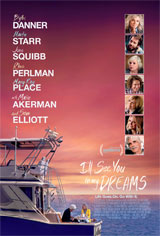
June Outing: I'll See You in My Dreams
On the second Tuesday of the month, June 9, those who haven't already done so
on their own will be seeing I'll See You in My Dreams. It's a late-in-life romance starring Blythe Danner (aka Gwyneth Paltrow's mother) and Sam Elliott. Some of our members might deem this film a bit too fluffier than our usual fare, but there's nothing else on just now that I believe would appeal to the majority of us. And I'm pretty sure a pleasant bit of fluff once in awhile won't harm us.
What I would have chosen, if the timing had been better, is Testament of Youth, based on unforgettable the World War I memoirs of Vera Brittain, But it doesn't arrive in our city until June 19.
The
Varsity Cinema is the only one in Toronto showing so I'll See You in My Dreams so far, so
we'll meet there in front of the box office approximately 20 minutes
before the 3:40 screen time.
We'll eschew the Bloor Street Diner afterward because several people (including me) consider it too expensive. So we'll go back to our former spot on the lower level of the ManuLife Centre, Sciaccia. Those who want to go for a bite after the film should notify me no later than noon on Monday, June 8 so I can make a reservation for the correct number of people.
SYNOPSIS:
A widow and former songstress (Blythe Danner), who's finding the dating scene difficult at her age, spends her time with her friends, golfing, gardening and singing karaoke, but still feels lonely.
When she randomly meets a sexy man (Sam Elliott) who's about her age, she realizes that life can begin anew at any age.
TRAILER: https://search.yahoo.com/search?p=trailer+i%27ll+see+you+in+my+dreams&ei=UTF-8&fr=chr-greentree_ff&ilc=12&type=523482
REVIEW: From the website of the late, great Roger Ebert: http://www.rogerebert.com/reviews/ill-see-you-in-my-dreams-2015
Friday, May 1, 2015
May Outing: Far From the Madding Crowd
As requested by several Movie Club members, a remake of Far From the Madding Crowd is the pick for our outing on Tuesday, May 5.
Some of us question whether any new version can top 1967's film of Thomas Hardy's classic novel, in which Julie Christie, Alan Bates and Peter Finch delivered such memorable performances. But we were convinced to give it a go when we watched the trailer, which you can see below.
Terry
SYNOPSIS:
Based on the literary classic by Thomas Hardy, FAR FROM THE MADDING CROWD is the story of independent, beautiful and headstrong Bathsheba Everdene (Carey Mulligan), who attracts three very different suitors: Gabriel Oak (Matthias Schoenaerts), a sheep farmer, captivated by her fetching willfulness; Frank Troy (Tom Sturridge), a handsome and reckless Sergeant; and William Boldwood (Michael Sheen), a prosperous and mature bachelor. This timeless story of Bathsheba’s choices and passions explores the nature of relationships and love – as well as the human ability to overcome hardships through resilience and perseverance.
TRAILER:
http://www.cineplex.com/Movie/far-from-the-madding-crowd
Carey Mulligan sings in the movie: http://www.cineplex.com/News/Carey-Mulligan-sings-in-Far-from-the-Madding-Crowd-trailer?cmpid=contenttag
Friday, April 3, 2015
April Outing: Woman in Gold
Yes, Woman in Gold - starring Helen Mirren as the
real-life woman who fought to recover art looted by the Nazis - has
arrived in Toronto on schedule. Despite somewhat tepid reviews, I feel sure that most of us will enjoy the film, which includes touching flashbacks to when Dame Helen's character was young during the terrifying Nazi era.
Movie Club members will see the film on Tuesday, April 7, at the Varsity Cinema (Bloor & Bay) for the 1:30 screening, after which those who wish to eat and chat will do so at the Bloor Street Diner in the ManuLife Centre. Let's meet near the box office 15-20 minutes earlier, but if you don't see me, just go inside and choose a seat.
Storyline
Helen Mirren stars in the
incredible story of Maria Altmann, a Jewish refugee who is forced to
flee Vienna during World War II. Decades later, determined to salvage
some dignity from her past, Maria has taken on a mission to reclaim a
painting the Nazis stole from her family: the famous Lady In Gold, a
portrait of her beloved Aunt Adele. Partnering with an inexperienced but
determined young lawyer (Ryan Reynolds), Maria embarks on an epic
journey for justice 60 years in the making.
Trailer: https://search.yahoo.com/search?p=movie+woman+in+gold&ei=UTF-8&fr=chr-greentree_ff&ilc=12&type=523482
Stories About the Film
Here's an article that isn't particularly kind to the movie, but is all about Helen Mirren: http://time.com/3768715/woman-in-gold-helen-mirren/
This is an interesting article about various battles to recover looted art: http://www.nytimes.com/2015/03/31/arts/design/the-story-behind-woman-in-gold-nazi-art-thieves-and-one-paintings-return.html?action=click&contentCollection=Movies&module=RelatedCoverage®ion=Marginalia&pgtype=article
Saturday, March 7, 2015
March Outing: The Second Best Exotic Marigold Hotel
Wouldn't a visit to balmy India be the perfect antidote
to the frigid weather we've been battling this winter? I say yes and that's why we'll be seeing The Second Best Exotic Marigold Hotel on Tuesday, March 10, at the Yonge/Dundas Odeon Cineplex. Screen time: 1:25
I
was hoping that a later afternoon screening would be available for
those of us who want to attend Life's March Mingle beforehand. But the
best we can do is 1:25 (the next one is 4:30, which is too late to be
practical for those who have to travel home from downtown.) The Mingle goes from
12-1:45, with a speech from Ryerson president Sheldon Levy as the
highlight.
Storyline:
The Second Best Exotic Marigold Hotel is the expansionist dream of Sonny
(Dev Patel), and it's making more claims on his time than he has
available, considering his imminent marriage to the love of his life,
Sunaina (Tina Desai). Sonny has his eye on a promising property now that
his first venture, The Best Exotic Marigold Hotel for the Elderly and
Beautiful, has only a single remaining vacancy - posing a rooming
predicament for fresh arrivals Guy (Richard Gere) and Lavinia (Tamsin
Greig). Evelyn and Douglas (Judi Dench and Bill Nighy) have now joined
the Jaipur workforce, and are wondering where their regular dates for
Chilla pancakes will lead, while Norman and Carol (Ronald Pickup and
Diana Hardcastle) are negotiating the tricky waters of an exclusive
relationship, as Madge (Celia Imrie) juggles two eligible and very
wealthy suitors. Perhaps the only one who may know the answers is newly
installed co-manager of the hotel, Muriel (Maggie Smith), the keeper of
everyone's secrets.
Trailer: https://search.yahoo.com/search?p=second+best+exotic+marigold+hotel&ei=UTF-8&fr=chr-greentree_ff&ilc=12&type=523482
Thursday, January 29, 2015
February Outing: Still Alice
LIFE Movie Club
Thursday, January 29, 2015
February Outing: Still Alice
This month's pick is Still Alice, for which Julianne Moore
has been winning top movie awards for her portrayal of a woman battling
early-onset Alzheimer's. I'm well aware that this is a painful topic
for some of you, as it is with me because both my parents died of the
disease. But when I learned that much of the story line is about a
woman's efforts to come up with strategies to help her endure what's
happened, I decided to see the film and to invite other Movie Club
members to join me if they wish to do so. We'll have to wait and see
whether this was a good or a bad decision.
We'll be seeing Still Alice on Tuesday, Feb. 3, at the Varsity Cinema (Bay & Bloor) for the 12:45 screening, meeting about 20 minutes earlier near the box office, as always. My regrets to those whose Life classes clash with this timing, but choosing the later time of 3:45 would meaning going to a restaurant afterward at dinner time, when we would be expected to order full meals, which is not what all of us want to do. Make sense?
Speaking of eating, we'll go to the Bloor Street Diner, so please email me by about noon on Monday, Feb. 2, so I can make a reservation for the correct number of munchers.
Here are details about the film and a trailer.
NOW Magazine:
Still Alice follows a woman slowly losing her mind to early Alzheimer's. It's not easy to give that premise much texture, but Still Alice succeeds because the script focuses less on Alice's (Julianne Moore) relationships with family, including her husband (Alec Baldwin), and more on the ingenious strategies she uses to keep the ravages of her disease at bay. Moore gives a powerful performance (no surprise there), Baldwin's sensitive turn goes against type, and Kristen Stewart, as one of Alice's kids, proves she can show a pulse if given the chance. The film does have a predictable trajectory - how could it not? - but it's certainly not movie-of-the-week fare.
TRAILER: https://www.youtube.com/watch?v=ZrXrZ5iiR0o
We'll be seeing Still Alice on Tuesday, Feb. 3, at the Varsity Cinema (Bay & Bloor) for the 12:45 screening, meeting about 20 minutes earlier near the box office, as always. My regrets to those whose Life classes clash with this timing, but choosing the later time of 3:45 would meaning going to a restaurant afterward at dinner time, when we would be expected to order full meals, which is not what all of us want to do. Make sense?
Speaking of eating, we'll go to the Bloor Street Diner, so please email me by about noon on Monday, Feb. 2, so I can make a reservation for the correct number of munchers.
Here are details about the film and a trailer.
NOW Magazine:
- Rating: PG
- Duration: 101 minutes
- Genre: Drama
- Directed by: Richard Glatzer, Wash Westmoreland
- Written by: Richard Glatzer,Wash Westmoreland
- Cast: Julianne Moore, Alec Baldwin, Kristen Stewart, Kate Bosworth, Hunter Parrish, Erin Darke, Victoria Cartagena, Shane McRae, Stephen Kunken,
Still Alice follows a woman slowly losing her mind to early Alzheimer's. It's not easy to give that premise much texture, but Still Alice succeeds because the script focuses less on Alice's (Julianne Moore) relationships with family, including her husband (Alec Baldwin), and more on the ingenious strategies she uses to keep the ravages of her disease at bay. Moore gives a powerful performance (no surprise there), Baldwin's sensitive turn goes against type, and Kristen Stewart, as one of Alice's kids, proves she can show a pulse if given the chance. The film does have a predictable trajectory - how could it not? - but it's certainly not movie-of-the-week fare.
TRAILER: https://www.youtube.com/watch?v=ZrXrZ5iiR0o
Preview
Preview
Friday, January 9, 2015
January Outing: Selma
I postponed our January outing to the second Tuesday of the month for two reasons. One was because a lot of Movie Club members told me they were still crazy-busy with post-holiday chores. The second, and most important reason, was that I wanted us to see Selma, which just arrived in Toronto.
This film is, of course, a biopic about the history-making marches in Alabama led by Martin Luther King in 1965 to shine a spotlight on how African-Americans, especially in the south, were being prevented from voting by violence and trickery.
We'll be seeing Selma at the Yonge-Dundas Cineplex-Odeon on Tues., Jan. 13. Screen time is 1:50, so let's meet near the upstairs box office about 20 minutes earlier.
Two things before I post a trailer and synopsis for Selma. One is that the number of Movie Club members just soared past the 100 mark. Lots of movie lovers at LIFE!
Also, I don't know if any other bloggers dedicate their posts, but I'm doing so now: To Jerry Walker, who died suddenly on November 2nd. Not only was Jerry an enthusiastic Movie Club member, a gifted storyteller for years in Recording Recollections, and one of LIFE's most popular class leaders, he actually took part in the Selma marches. His daughters told us at a memorial for Jerry last month that when he was a young educator in California in 1965, their father dropped everything and scrounged up the money to travel to Alabama to join in the protests. They also said that he rarely spoke about his participation because, he said, he didn't want it to sound like bragging. Good-bye, Jerry, you are sorely missed!
Selma Trailer: http://www.cinemaclock.com/trailers/ont/Toronto/199709/Selma.html
Roger Ebert Website:
In a perfect world, “Selma” would exist solely as a depiction
of darker days long since past, an American history lesson that
concludes with reassurances that its horrors will no longer be
perpetrated, tolerated nor celebrated. Alas, perfection eludes us on
this mortal, earthly plane; “Selma” shows the evolution of change while
beaming a spotlight on the stunted growth of that which has not changed.
Its timeliness is a spine-chilling reminder that those who do not know
their history are doomed to repeat it. Its story provides a blueprint
not only of the past, but of the way forward.
There’s a reason why Ava DuVernay’s film is called “Selma” and not “King”. Like Spielberg’s “Lincoln”, “Selma” is as much about the procedures of political maneuvering, in-fighting and bargaining as it is about the chief orchestrator of the resulting deals. “Selma” affords Dr. Martin Luther King, Jr. the same human characteristics of humor, frustration and exhaustion that “Lincoln” provided its President. This relatable humanity elevates King’s actions and his efforts. It inspires by suggesting that the reverence for Dr. King was bestowed on a person no different than any of us. If he can provoke change, we have no excuse not to as well.
As King, David Oyelowo is a revelation. Like Anthony Hopkins in “Nixon”, he channels the essence of his character rather than a dead-on visual interpretation. In recreating King’s speaking voice, Oyelowo resists the preacherly curlicues one might be inclined to use based on hearing King’s speeches. Like any good pastor, Oyelowo saves those cadences for his speech scenes, the last of which is so stirring and powerful it knocks the air out of your lungs. Oyelowo channels a conflicted King, a tired man with the weight of the movement on his shoulders, then merges that with defiance, humor, strength and strategic expertise. In Oyelowo’s excellent performance, King becomes a complex, flawed man whose faith in God kept him from utter despair.
Known for her superb indie dramas “I Will Follow” and “Middle of Nowhere”, DuVernay has proven herself a master of small, intimate moments. “Selma” never loses focus on the interpersonal dynamics between King and his followers, his detractors and his family. While touching base with details on SNCC, the SCLC and the organization of the Selma to Montgomery Marches, DuVernay gives memorable scenes to a wide variety of character actors in real-life roles. Andre Holland’s Andrew Young, Stephan James’ John Lewis, Colman Domingo’s Rev. Abernathy and Common’s James Bevel stand out, but eagle-eyed viewers will also notice “Dear White People”’s Tessa Thompson, Cuba Gooding, Jr., Martin Sheen and Wendell Pierce. Even comedian Niecy Nash shows up as a gracious, funny host who invites King and his cohorts into her home.
“Selma” continues DuVernay’s exploration of female empowerment by devoting time to King’s marriage to Coretta Scott King (a powerful Carmen Ejogo). We’re reminded that the movement is as hard on her as it is for her husband, especially since she is home with the kids and the constant victim of harassment from citizens and the government. In one of the film’s best scenes, King is asked a very hard question by his wife. The actors and the director take their time here, with Oyelowo and Ejogo silently and masterfully working the uncomfortable pause between question and answer. In another very good scene, Coretta Scott King meets with Malcolm X (a convincing Nigel Thatch), and their dialogue is an informative piece of strategizing.
In addition to reminding us how good she is with drama, DuVernay puts Hollywood on notice by mastering huge sequences heretofore unseen in her work. Her staging of “Bloody Sunday” on the Edmund Pettis bridge is a spectacular mini-movie that could stand on its own as a short. Narrated by a journalist calling in the story, the scene takes on documentarian proportions. With this scene, and her horrific staging of the 16th Street Baptist Church bombing, DuVernay and her editor Spencer Averick make you feel the intensity and chaotic terror of the violence. Dozens of kneeling, peaceful protests fill the screen end to end, and the juxtaposition between the historical depiction on the movie screen and the current images on today’s TV screens does not go unnoticed.
During the fight for voter rights, King has several meetings with President Johnson (a jarring but effective Tom Wilkinson). Their scenes, and Johnson’s scenes with J. Edgar Hoover (Dylan Baker) focus on the political gamesmanship required to bring about change. “Selma” points out the media’s role in influencing the hearts and minds of the American people, and how easily that can be manipulated. King knows about this media power, and how his team handles it is a precursor to today’s social media shenanigans.
The prescient timing of “Selma” could not have been planned. Its opening scene is a casual reminder of what life was like before the Voting Rights Act, with poll taxes and absurd literacy tests suppressing the Black vote. Miss Sofia herself, producer Oprah Winfrey, shows up in the opening scene as a woman on her fourth journey to the voting bureau to take the test that will give her a right she already had. Winfrey disappears into an ordinary person’s countenance, and her gradual disappointment as she realizes once again she will be denied is both heartbreaking and a warning.
“Selma” works as both an epic and a small scale drama, and credit must be extended to DuVernay’s longtime cinematographer, Bradford Young. Young’s camera loves Black skin, and he lights it in beautiful, fearless, shadowy Gordon Willis flourishes the likes of which I have not seen in Hollywood cinema. His stylistic touches during the action scenes are startling and original. That there hasn’t been more talk about his work (he also shot “Ain’t Them Bodies Saints”) is something of a travesty that “Selma” should correct.
This is an emotional movie that aims to anger, sadden and inspire viewers, sometimes in the same scene. “Selma” takes no prisoners and, while it welcomes moviegoers of all hues, it has no intention of sugarcoating its horrors for politically correct comforting. This film—one of the year’s best—is an announcement of a major talent in Ms. DuVernay, but its core message will not be lost nor hidden by the accolades it receives. Through the noise, “Selma” speaks to us: From the top of the hill of progress, it is just as easy to slide down backwards as it is to move forward. Attention must be paid.
This film is, of course, a biopic about the history-making marches in Alabama led by Martin Luther King in 1965 to shine a spotlight on how African-Americans, especially in the south, were being prevented from voting by violence and trickery.
We'll be seeing Selma at the Yonge-Dundas Cineplex-Odeon on Tues., Jan. 13. Screen time is 1:50, so let's meet near the upstairs box office about 20 minutes earlier.
Two things before I post a trailer and synopsis for Selma. One is that the number of Movie Club members just soared past the 100 mark. Lots of movie lovers at LIFE!
Also, I don't know if any other bloggers dedicate their posts, but I'm doing so now: To Jerry Walker, who died suddenly on November 2nd. Not only was Jerry an enthusiastic Movie Club member, a gifted storyteller for years in Recording Recollections, and one of LIFE's most popular class leaders, he actually took part in the Selma marches. His daughters told us at a memorial for Jerry last month that when he was a young educator in California in 1965, their father dropped everything and scrounged up the money to travel to Alabama to join in the protests. They also said that he rarely spoke about his participation because, he said, he didn't want it to sound like bragging. Good-bye, Jerry, you are sorely missed!
Selma Trailer: http://www.cinemaclock.com/trailers/ont/Toronto/199709/Selma.html
Roger Ebert Website:
There’s a reason why Ava DuVernay’s film is called “Selma” and not “King”. Like Spielberg’s “Lincoln”, “Selma” is as much about the procedures of political maneuvering, in-fighting and bargaining as it is about the chief orchestrator of the resulting deals. “Selma” affords Dr. Martin Luther King, Jr. the same human characteristics of humor, frustration and exhaustion that “Lincoln” provided its President. This relatable humanity elevates King’s actions and his efforts. It inspires by suggesting that the reverence for Dr. King was bestowed on a person no different than any of us. If he can provoke change, we have no excuse not to as well.
As King, David Oyelowo is a revelation. Like Anthony Hopkins in “Nixon”, he channels the essence of his character rather than a dead-on visual interpretation. In recreating King’s speaking voice, Oyelowo resists the preacherly curlicues one might be inclined to use based on hearing King’s speeches. Like any good pastor, Oyelowo saves those cadences for his speech scenes, the last of which is so stirring and powerful it knocks the air out of your lungs. Oyelowo channels a conflicted King, a tired man with the weight of the movement on his shoulders, then merges that with defiance, humor, strength and strategic expertise. In Oyelowo’s excellent performance, King becomes a complex, flawed man whose faith in God kept him from utter despair.
Known for her superb indie dramas “I Will Follow” and “Middle of Nowhere”, DuVernay has proven herself a master of small, intimate moments. “Selma” never loses focus on the interpersonal dynamics between King and his followers, his detractors and his family. While touching base with details on SNCC, the SCLC and the organization of the Selma to Montgomery Marches, DuVernay gives memorable scenes to a wide variety of character actors in real-life roles. Andre Holland’s Andrew Young, Stephan James’ John Lewis, Colman Domingo’s Rev. Abernathy and Common’s James Bevel stand out, but eagle-eyed viewers will also notice “Dear White People”’s Tessa Thompson, Cuba Gooding, Jr., Martin Sheen and Wendell Pierce. Even comedian Niecy Nash shows up as a gracious, funny host who invites King and his cohorts into her home.
“Selma” continues DuVernay’s exploration of female empowerment by devoting time to King’s marriage to Coretta Scott King (a powerful Carmen Ejogo). We’re reminded that the movement is as hard on her as it is for her husband, especially since she is home with the kids and the constant victim of harassment from citizens and the government. In one of the film’s best scenes, King is asked a very hard question by his wife. The actors and the director take their time here, with Oyelowo and Ejogo silently and masterfully working the uncomfortable pause between question and answer. In another very good scene, Coretta Scott King meets with Malcolm X (a convincing Nigel Thatch), and their dialogue is an informative piece of strategizing.
In addition to reminding us how good she is with drama, DuVernay puts Hollywood on notice by mastering huge sequences heretofore unseen in her work. Her staging of “Bloody Sunday” on the Edmund Pettis bridge is a spectacular mini-movie that could stand on its own as a short. Narrated by a journalist calling in the story, the scene takes on documentarian proportions. With this scene, and her horrific staging of the 16th Street Baptist Church bombing, DuVernay and her editor Spencer Averick make you feel the intensity and chaotic terror of the violence. Dozens of kneeling, peaceful protests fill the screen end to end, and the juxtaposition between the historical depiction on the movie screen and the current images on today’s TV screens does not go unnoticed.
During the fight for voter rights, King has several meetings with President Johnson (a jarring but effective Tom Wilkinson). Their scenes, and Johnson’s scenes with J. Edgar Hoover (Dylan Baker) focus on the political gamesmanship required to bring about change. “Selma” points out the media’s role in influencing the hearts and minds of the American people, and how easily that can be manipulated. King knows about this media power, and how his team handles it is a precursor to today’s social media shenanigans.
The prescient timing of “Selma” could not have been planned. Its opening scene is a casual reminder of what life was like before the Voting Rights Act, with poll taxes and absurd literacy tests suppressing the Black vote. Miss Sofia herself, producer Oprah Winfrey, shows up in the opening scene as a woman on her fourth journey to the voting bureau to take the test that will give her a right she already had. Winfrey disappears into an ordinary person’s countenance, and her gradual disappointment as she realizes once again she will be denied is both heartbreaking and a warning.
“Selma” works as both an epic and a small scale drama, and credit must be extended to DuVernay’s longtime cinematographer, Bradford Young. Young’s camera loves Black skin, and he lights it in beautiful, fearless, shadowy Gordon Willis flourishes the likes of which I have not seen in Hollywood cinema. His stylistic touches during the action scenes are startling and original. That there hasn’t been more talk about his work (he also shot “Ain’t Them Bodies Saints”) is something of a travesty that “Selma” should correct.
This is an emotional movie that aims to anger, sadden and inspire viewers, sometimes in the same scene. “Selma” takes no prisoners and, while it welcomes moviegoers of all hues, it has no intention of sugarcoating its horrors for politically correct comforting. This film—one of the year’s best—is an announcement of a major talent in Ms. DuVernay, but its core message will not be lost nor hidden by the accolades it receives. Through the noise, “Selma” speaks to us: From the top of the hill of progress, it is just as easy to slide down backwards as it is to move forward. Attention must be paid.
Subscribe to:
Posts (Atom)
No comments:
Post a Comment